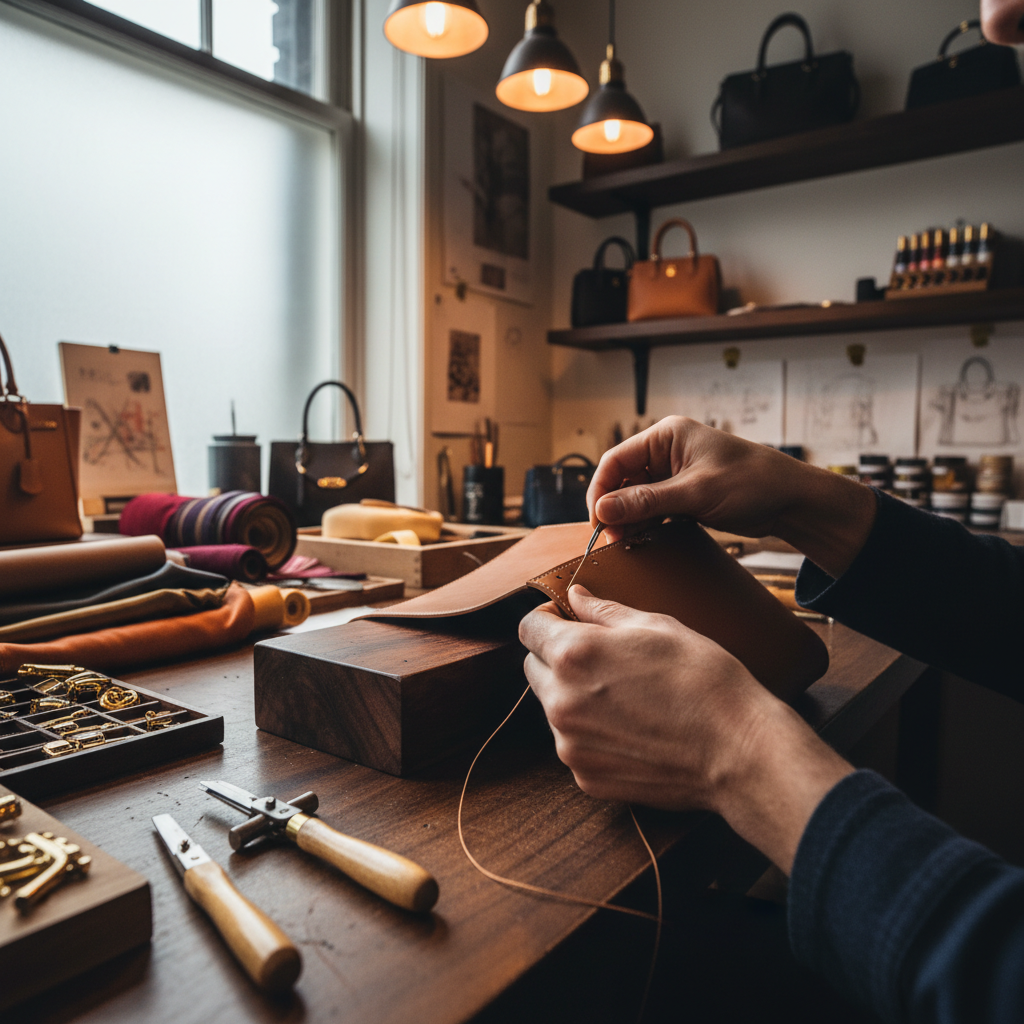
The making
process.
From the first cut to the final wax, every step is deliberate. Here is what happens before a piece reaches your hands.

Leather Selection
Not all leather is equal. We work exclusively with full-grain and vegetable-tanned hides — the top layer of the hide, untouched, with all its natural markings intact. We inspect each hide by hand before any cutting begins. Blemishes, scars, and grain variations are not defects. They are proof of origin.
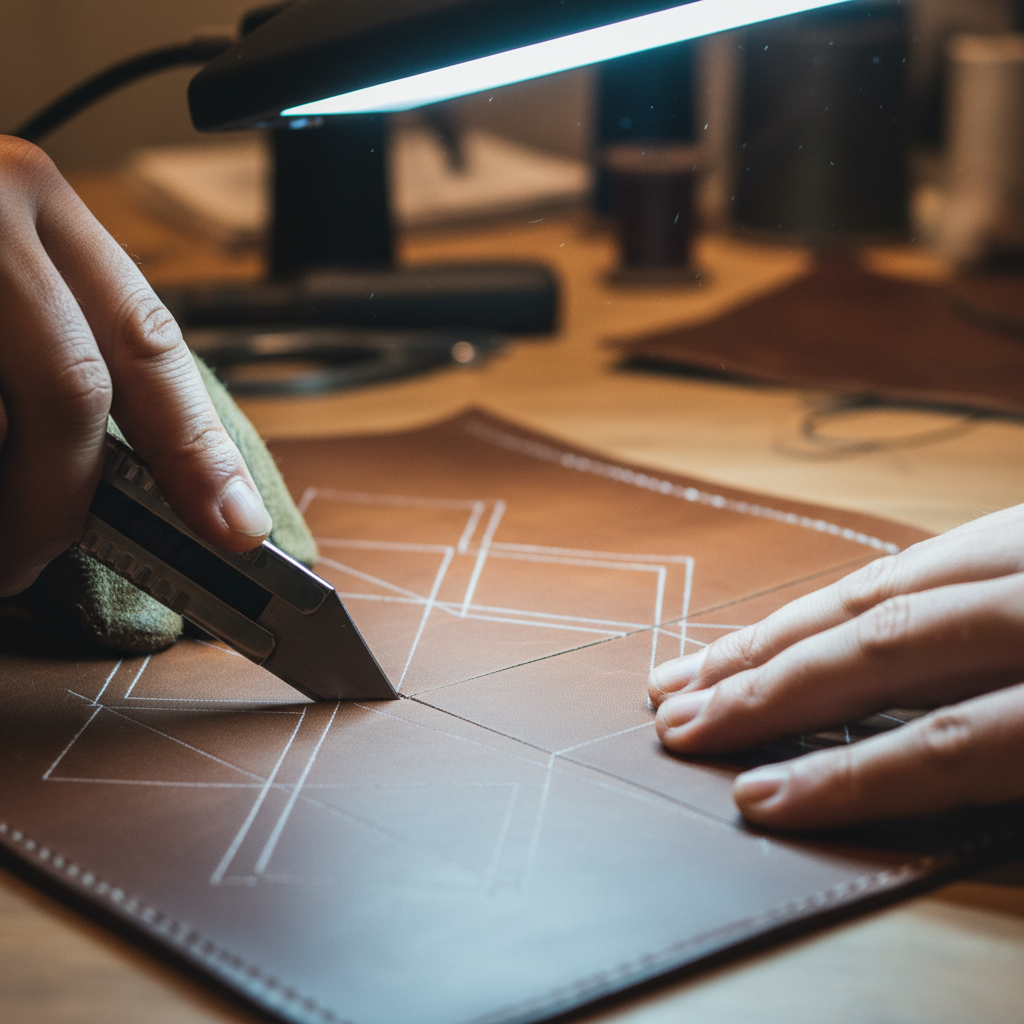
Pattern & Cutting
Patterns are drawn directly onto the leather using traditional tools — no digital plotters. Each piece is cut with a sharp knife against a steel rule, guided entirely by eye and experience. The direction of the grain, the placement of natural marks, the weight of the piece — all considered before a single cut.
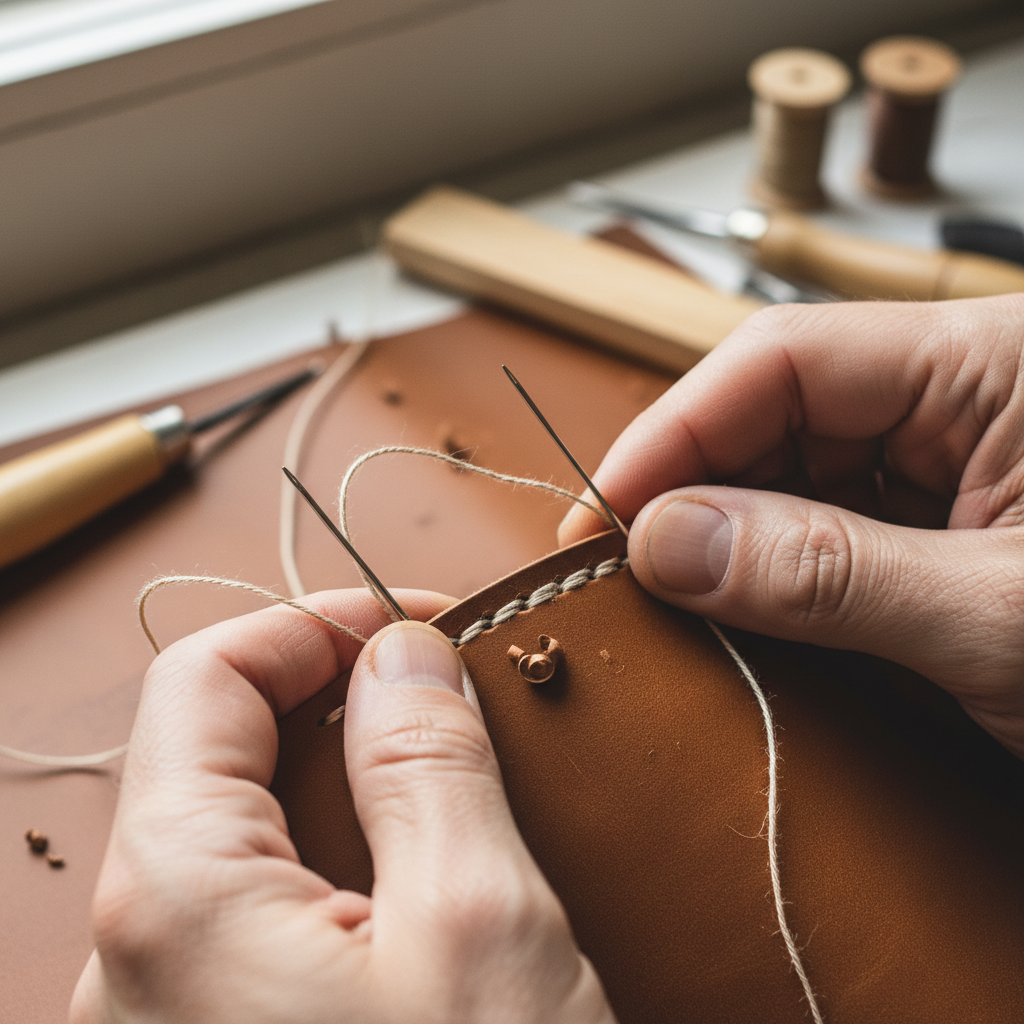
Saddle Stitching
We use saddle stitching — not machine stitching. The difference is structural. In saddle stitching, two needles are used simultaneously, one on each end of a single thread. If one stitch breaks, the others hold. A machine-stitched seam, if one thread breaks, can unravel entirely. Ours won't. Each stitch is pulled with equal tension, by feel, not by mechanism.
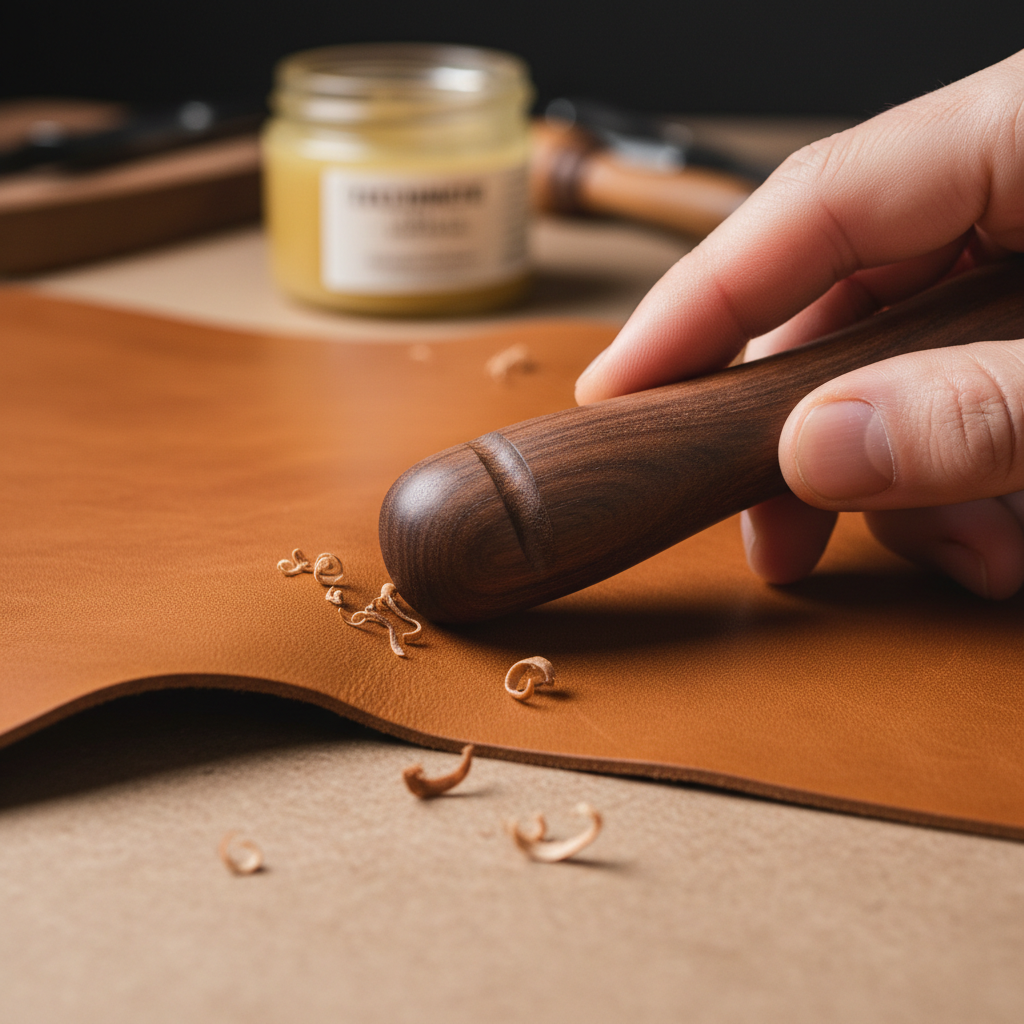
Edge Finishing
The edges of a leather piece reveal the maker's standards. We bevel every edge, dye it to match the leather, then burnish it with a wood slicker and beeswax until it is smooth, sealed, and rounded. A well-finished edge will not crack, fray, or peel. It will only deepen in colour as the piece ages.
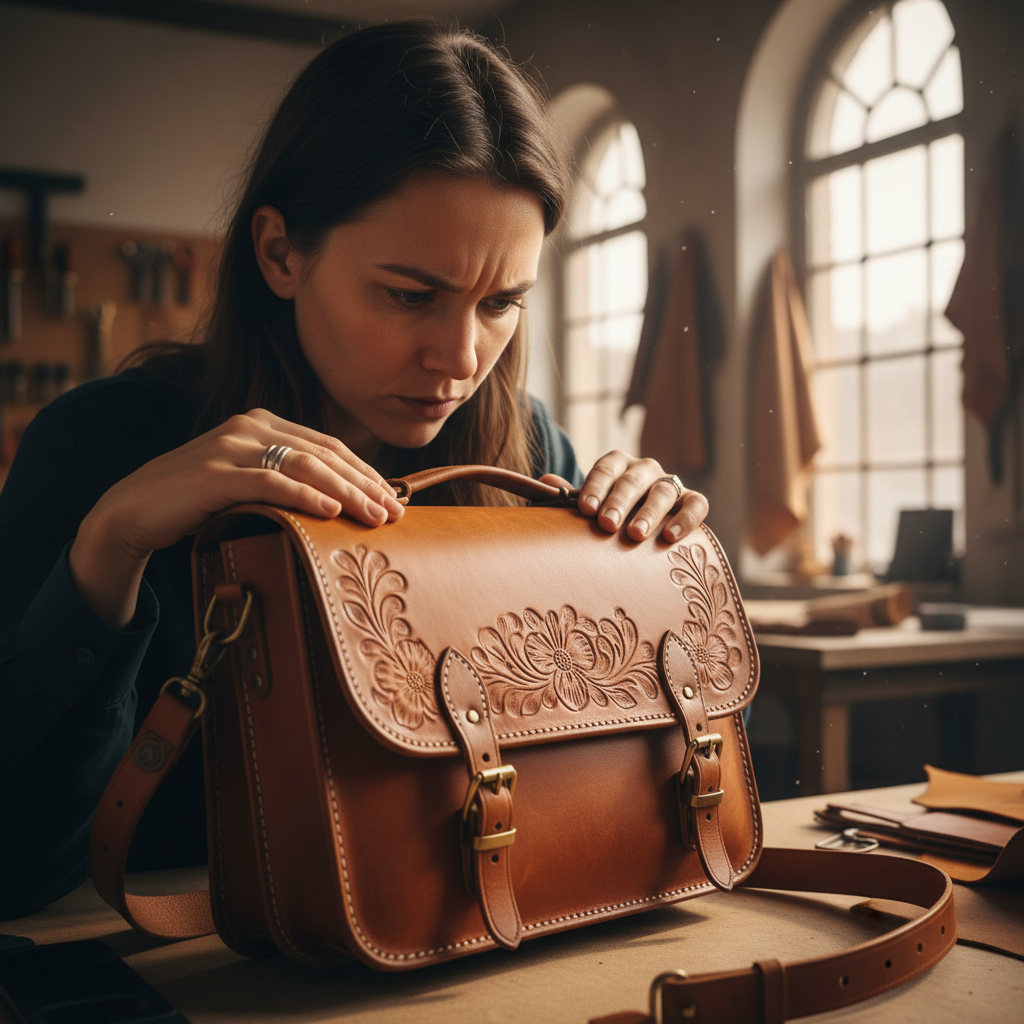
Quality Inspection
Before packaging, every piece is inspected under direct light. We check every stitch, every edge, every seam, every buckle. We look for tension inconsistencies, missed edges, soft spots in the leather. If something isn't right, we correct it. If it can't be corrected, we don't send it.
The leathers
we trust.
We work with a small number of tanneries we know personally. Every hide is selected by hand.
Full-grain Vegetable Tanned
Origin
Italy
Develops a rich patina over time. The most natural form of leather.
Used for: Bags, wallets, accessories
Horween Shell Cordovan
Origin
Chicago, USA
Exceptionally dense and durable. Develops a mirror-like shine.
Used for: Wallets, watch straps, small goods
English Bridle
Origin
England
Wax-stuffed for water resistance. Firm, structured, long-lasting.
Used for: Bags, belts, key goods
Pull-up Leather
Origin
Germany
Oils rise to the surface when bent, creating a natural pull-up effect.
Used for: Weekenders, large totes